Why Tipping Feels Broken
You are standing at the counter. You just ordered a $3 coffee. You tap your card and then it happens. The clerk flips the iPad around.
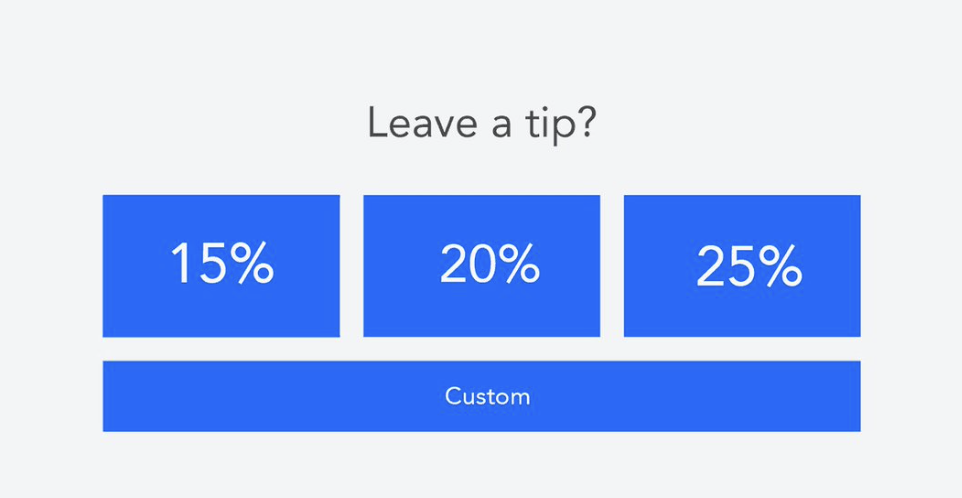
The screen stares at you with three big buttons: $1, $2, or $3.
Behind you, the line is getting long. The clerk is watching you. Suddenly, buying a coffee feels like a high-stakes test of your character. If you don't tip, do you feel like a "bad" person? If you do tip, you just paid a 33% - 100% tax on a drink you haven't even tasted yet.
This is Social Pressure Marketing. It is a digital guilt trip. It is exactly why tipping feels so frustrating for almost everyone right now.
The Hidden Hand: Why the Screen Wants Your Money
We have to look at who actually built these screens. Companies like Square and Toast are the ones who design these checkout flows. They are not doing it just to make it more convenient for the workers. They are doing it because they take a percentage of every single transaction.
The more you tip, the more they make too.
These companies are incentivized to make the "suggested" tips as high as possible. They start the options at 20% or 25% because they know most people will just click a button to avoid the awkwardness. They are using your own psychology against you to pad their own profits.
A Brief History of the Tip
Tipping did not start with an iPad. In the mid-1800s, wealthy Americans brought the habit home from Europe. After the Civil War, business owners used tipping for a specific reason. It let them hire people and pay them nothing. They forced the customers to pay the workers' wages through tips.
By 1966, this became the law. Even today, some bosses only have to pay $2.13 an hour because they expect you to make up the difference. But in 2026, we are seeing "Tip Creep." Now, every shop—from the fast-food counter to the self-checkout kiosk—is asking for a cut.
The Pizza Standoff
I remember a day it was rarely expected to tip for fast food or self-service. It was a clear trade. You give them money and they give you a burger.
I want to be clear: I try to be a generous person. Most of the time, I tip 20% regardless of the occasion or service, because I used to work in the service industry. I know how much those tips matter. But recently, the system felt broken to me.
I drove 20 minutes to a restaurant to pick up three pizzas. It was a $70 order. I drove there, walked in, and picked up the boxes myself. There was zero service involved. I still wanted to be kind, so I threw a $5 bill into the tip jar.
The reaction I got from the person behind the counter was one of total disgust.
It made me stop and think. What exactly are we tipping for? When the tip comes before the service, or when there is no service at all, it is no longer a reward. It is a "guilt tax."
Also note*: If a $15 tip on a meal makes you cringe, you might not be in a position to be eating out in the first place. Tipping is part of the cost of the experience. If your budget is so tight that the tip causes a peak in stress, you are living too close to the edge.
Is Self-Serve Tipping Real?
It sounds like a joke, but it is happening. People are seeing tip prompts at self-checkout kiosks in airports and even at some grocery stores. There are stories of people buying a bottle of water from a machine and being asked to leave 20%. This is the peak of "Tip Creep." It is no longer about service. It is a hidden way for business owners to cover their own costs.
Your Personal Tipping Guide
You need to set your own boundaries ahead of time so you don't feel pressured every time you buy a cookie. Here is a framework to help you decide before you get to the register.
1. The "Sit-Down" Rule (15% to 20%)
This is for restaurants, bars, and haircuts.
The Situation: Someone brings you water, takes your order, and cleans up your mess.
The Action: Tip 15% to 20% every time. These workers usually make a sub-minimum wage and rely on this to pay their rent.
2. The "Counter" Rule (Optional & Small)
This is for coffee shops, bakeries, and takeout.
The Situation: You are standing up to order and you are the one cleaning your own table.
The Action: If the service was fast and kind, a $1 or $2 tip is a great way to say thank you. If it was just a standard transaction, it is okay to hit "No Tip."
3. The "Self-Serve" Rule (Zero)
This is for self-checkout kiosks or retail stores.
The Situation: You scanned the items yourself. No one served you.
The Action: Hit 0%. No service = no tip.
Quick Decision Guide: Tip or Skip?
Fine Dining or Sit-Down: Always tip 20% for the full service provided.
Barbers and Hair Stylists: Always tip 15% to 20% for the professional skill used.
Pizza or Food Delivery: Tip 15% minimum for the gas and time of the driver.
Moving or Home Service: Tip $10 to $20 per person for heavy manual labor.
Coffee or Juice Bar: Tip $1 if the drink was complex or custom made.
Takeout Food Pickup: Tip $1 to $2 as a courtesy, not a full percentage.
Valet Parking: Tip $2 to $5 when they return your car safely.
Self-Checkout Kiosk: Skip. You did the labor of scanning and bagging yourself.
Online Retail Orders: Skip. Paying for shipping already covers the delivery cost.
Vending Machine Kiosk: Skip. There is no human interaction or service here.
The Bottom Line
A new study shows that 55% of people only tip because they feel guilty.
Don't be one of them.
Generosity is a great thing, but it only works when you choose to be generous. If you tip because you’re scared of a screen, you will grow to resent the people you are trying to help. If you want to be a person who can tip big when it counts, you have to be disciplined enough to say no when the system is trying to trick you.
Decide your rules now, so you don't have to feel the pressure later.
P.S. Did this post help you decide exactly when to hit "0%"?
If yes, consider that clarity a virtual service. Please tip 20, 25, or 30% right now to show your appreciation. (Wait, never mind. The tech hasn't caught us here... yet.)
Hey, but seriously. If a 20% tip makes you cringe because your budget is already on life support, we need to talk. Tipping shouldn't be a crisis. Let’s get you in a place where generosity isn’t stressful. Build your Money Map below.